Abstract
Domain generalization in semantic segmentation faces challenges from domain shifts, particularly under adverse conditions. While diffusion-based data generation methods show promise, they introduce inherent misalignment between generated images and semantic masks. This paper presents FLEX-Seg (FLexible Edge eXploitation for Segmentation), a framework that transforms this limitation into an opportunity for robust learning. FLEX-Seg comprises three key components: (1) Granular Adaptive Prototypes that capture boundary characteristics across multiple scales, (2) Uncertainty Boundary Emphasis that dynamically adjusts learning emphasis based on prediction entropy, and (3) Hardness-Aware Sampling that progressively focuses on challenging examples. By leveraging inherent misalignment rather than enforcing strict alignment, FLEX-Seg learns robust representations while capturing rich stylistic variations. Experiments across five real-world datasets demonstrate consistent improvements over state-of-the-art methods, achieving 2.44% and 2.63% mIoU gains on ACDC and Dark Zurich. Our findings validate that adaptive strategies for handling imperfect synthetic data lead to superior domain generalization.
Key Contributions
- New Perspective on Synthetic Data: We reframe the inherent misalignment between diffusion-generated images and semantic masks as a useful learning signal rather than a limitation to be corrected.
- Granular Adaptive Prototypes (GAP): A prototype-based contrastive learning module that captures boundary representations across multiple thickness levels (thin, medium, thick) and semantic classes, enabling domain-invariant boundary learning.
- Uncertainty Boundary Emphasis (UBE): An entropy-based dynamic weighting mechanism that automatically amplifies supervision on uncertain boundary pixels without manual hyperparameter tuning.
- Hardness-Aware Sampling (HAS): A curriculum-style sampling strategy that progressively shifts from random to loss-based sampling, focusing training on challenging examples with complex structures or adverse conditions.
Key Observations
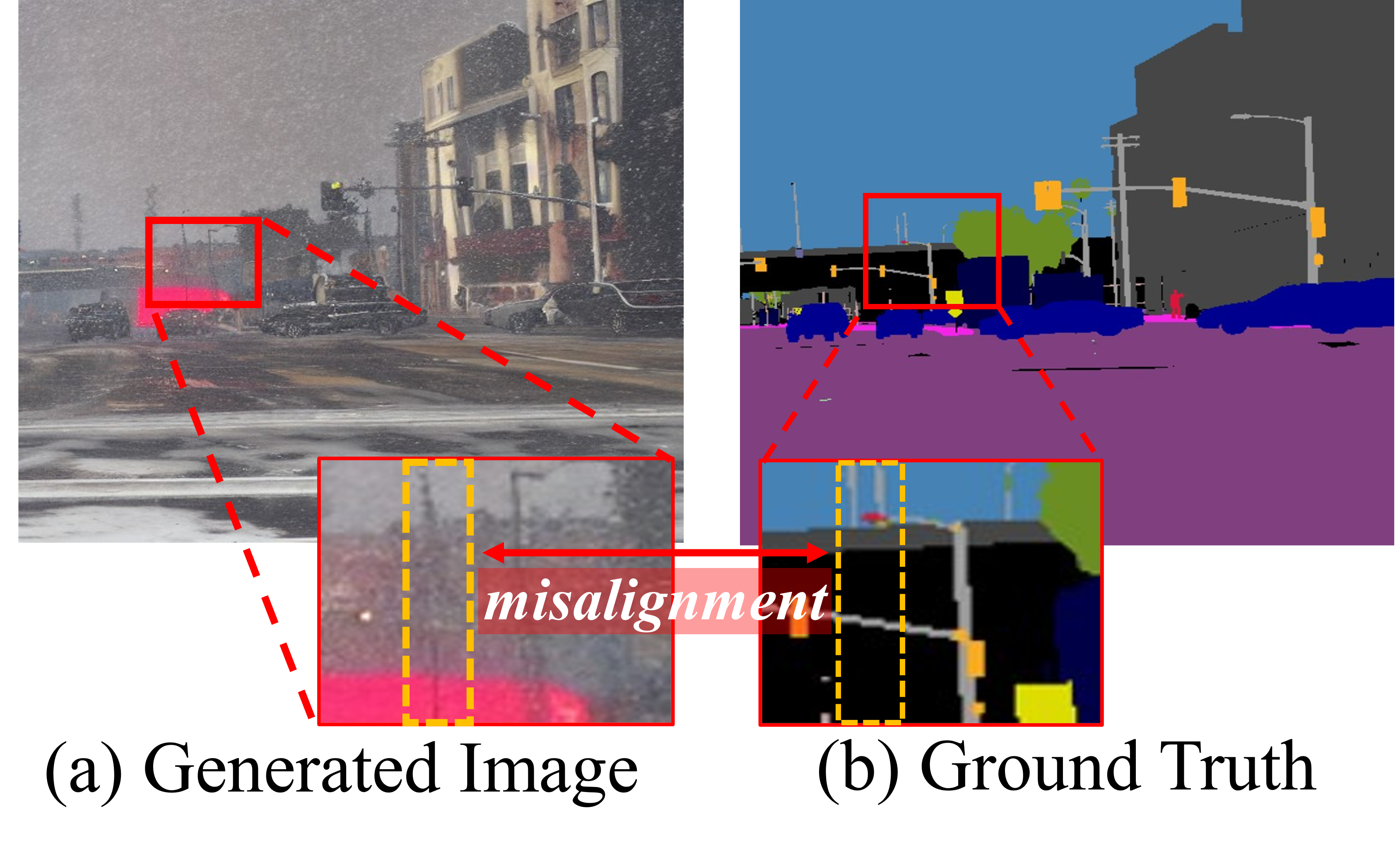
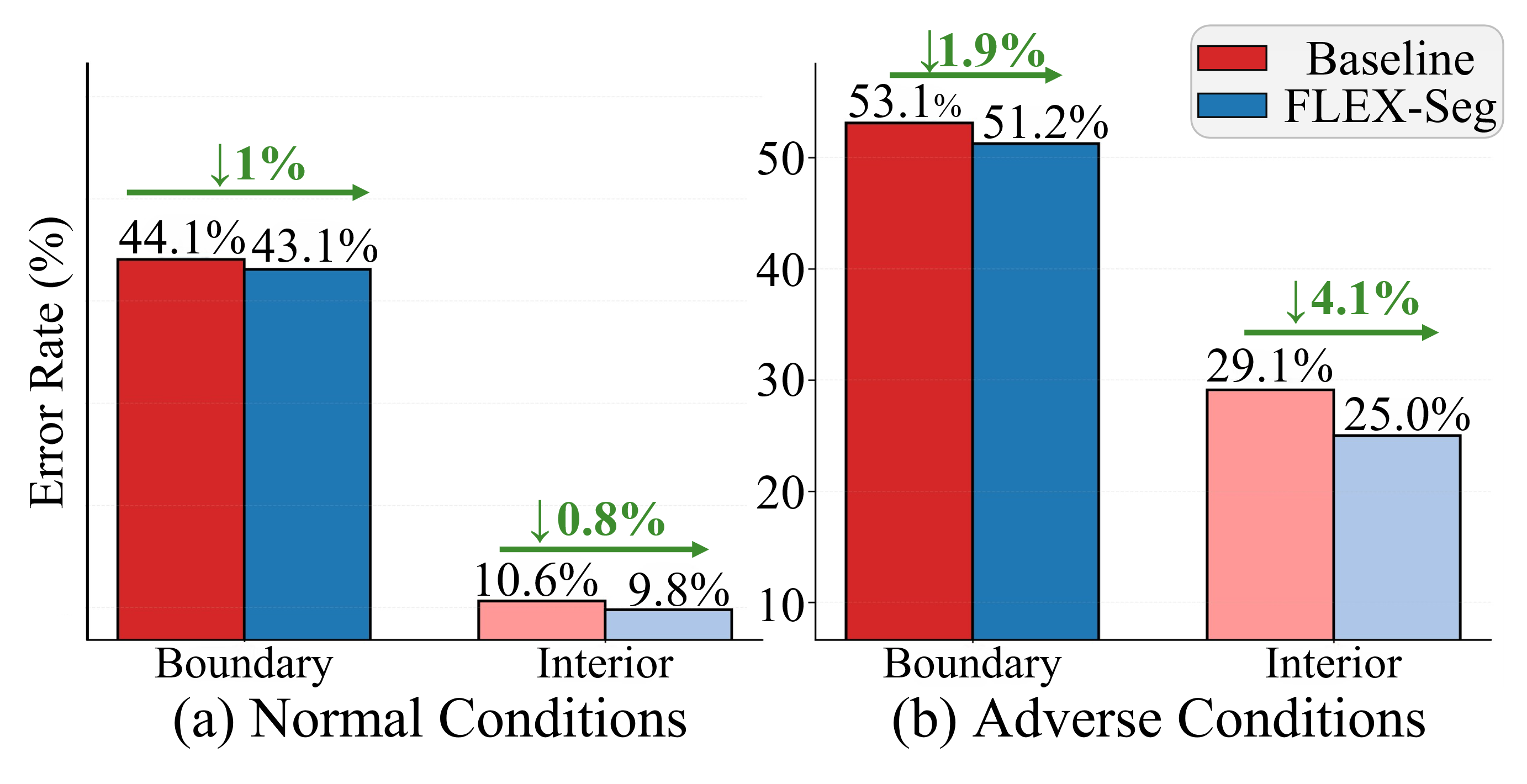
Diffusion-based generation improves domain generalization—but remains imperfect at boundaries.
- Unlike real datasets where masks are derived from images, diffusion methods generate images from masks. This reversed process inherently creates spatial misalignment between synthesized images and their semantic annotations.
- Boundary regions consistently exhibit higher error rates than interior regions, with the gap becoming even more pronounced under adverse conditions (fog, snow, rain, nighttime).
- Poor visibility conditions naturally produce blurred boundaries and reduced contrast, making precise object delineation especially difficult.
- Existing boundary-aware methods assume perfect spatial correspondence—an assumption that breaks down with synthetic data.
💡 Key Insight: Both issues stem from the same root cause—boundary uncertainty—producing unreliable supervision at the most critical regions for segmentation.
🔍 Our Question: Can we leverage this noise instead of fighting it?
Motivation
How should we handle noisy boundary regions?
We tested four boundary handling strategies by adjusting the weight W(x,y) at boundary pixels in the loss function:
| Strategy | W(x,y) at boundary |
|---|---|
| Ignore | 0 |
| Reduce | α < 1 |
| Threshold | min(τ, ℒ) |
| Enhance | α > 1 |
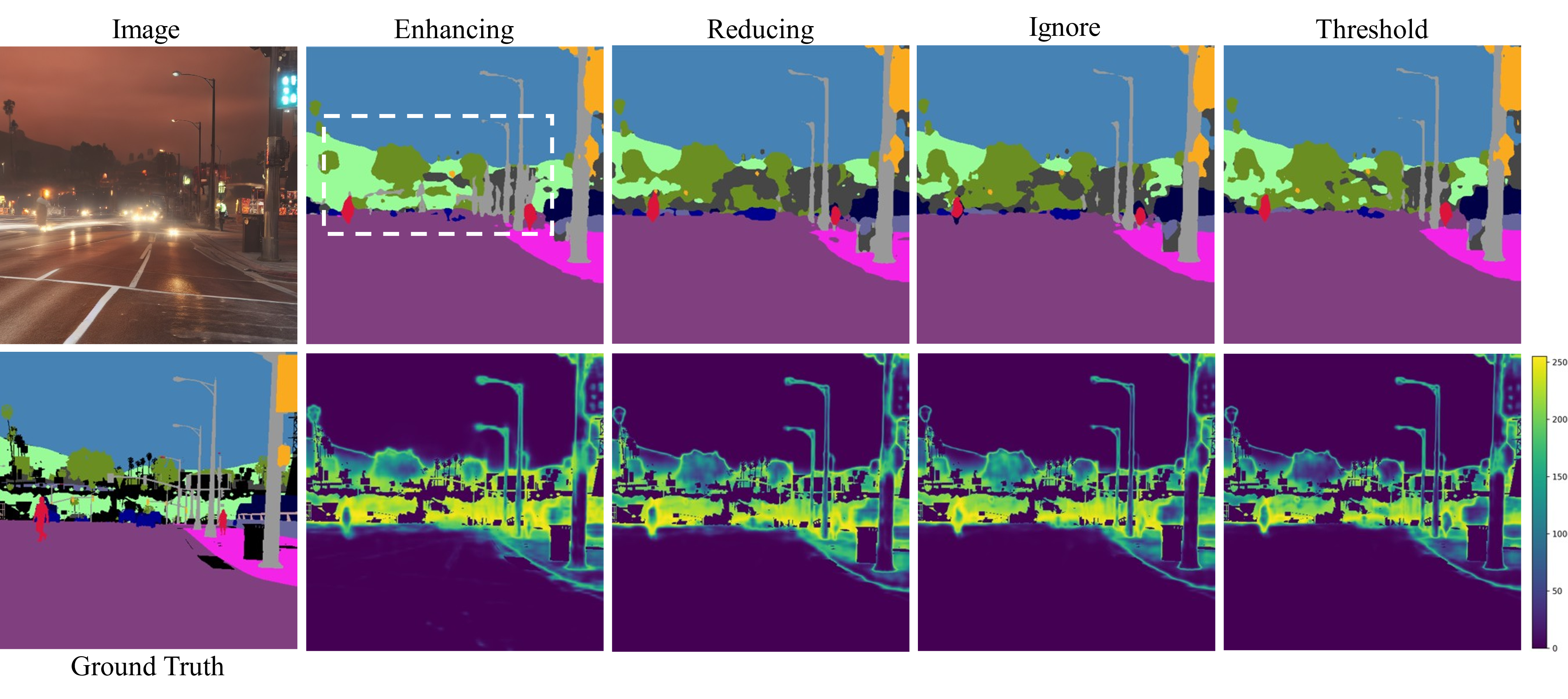
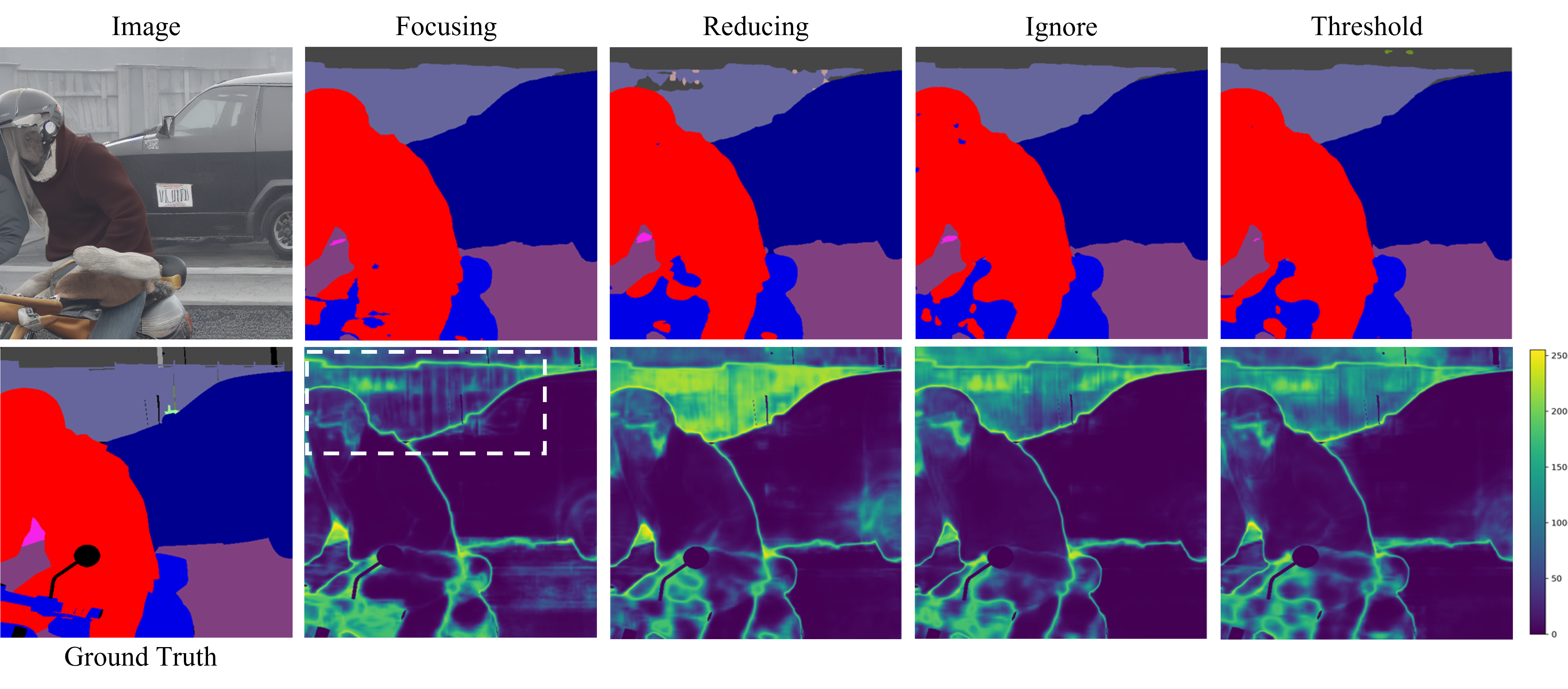
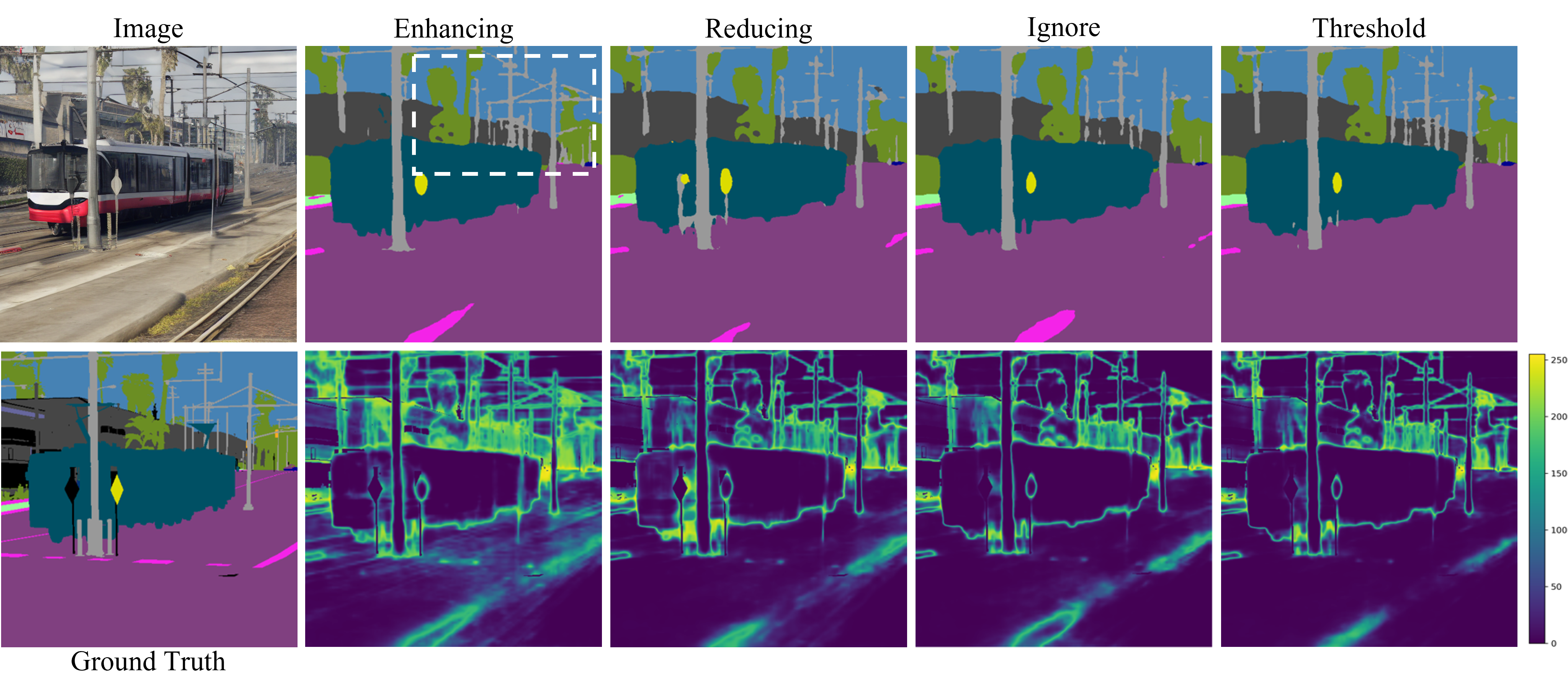
- The Enhance strategy consistently improved performance across domains.
- By maintaining high entropy at uncertain boundaries while keeping low entropy in clear interiors, the model makes confident predictions where visual cues are clear, yet remains appropriately cautious at challenging regions.
- Traditional approaches that ignore or reduce boundary weights fail to capture the rich stylistic variations present in synthetic data.
💡 Key Insight: Adaptive boundary emphasis with uncertainty-aware learning leads to robust domain generalization.
🚀 Our Approach: Rather than enforcing strict alignment, we leverage inherent misalignment to learn more robust and transferable representations.
Method: FLEX-Seg Framework
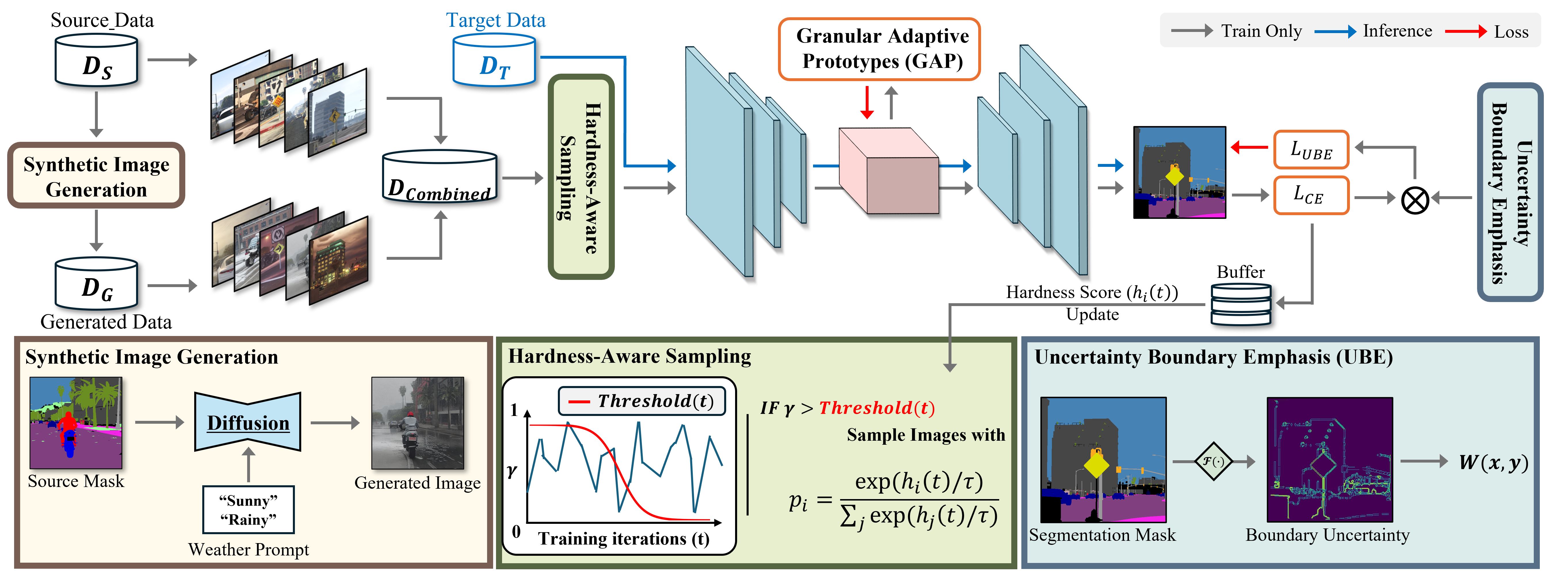
Overview of the FLEX-Seg framework integrating three key components for robust domain generalization.
Our framework transforms inherent misalignment in synthetic data into an opportunity for robust domain generalization through three synergistic components.
1. Granular Adaptive Prototypes (GAP)
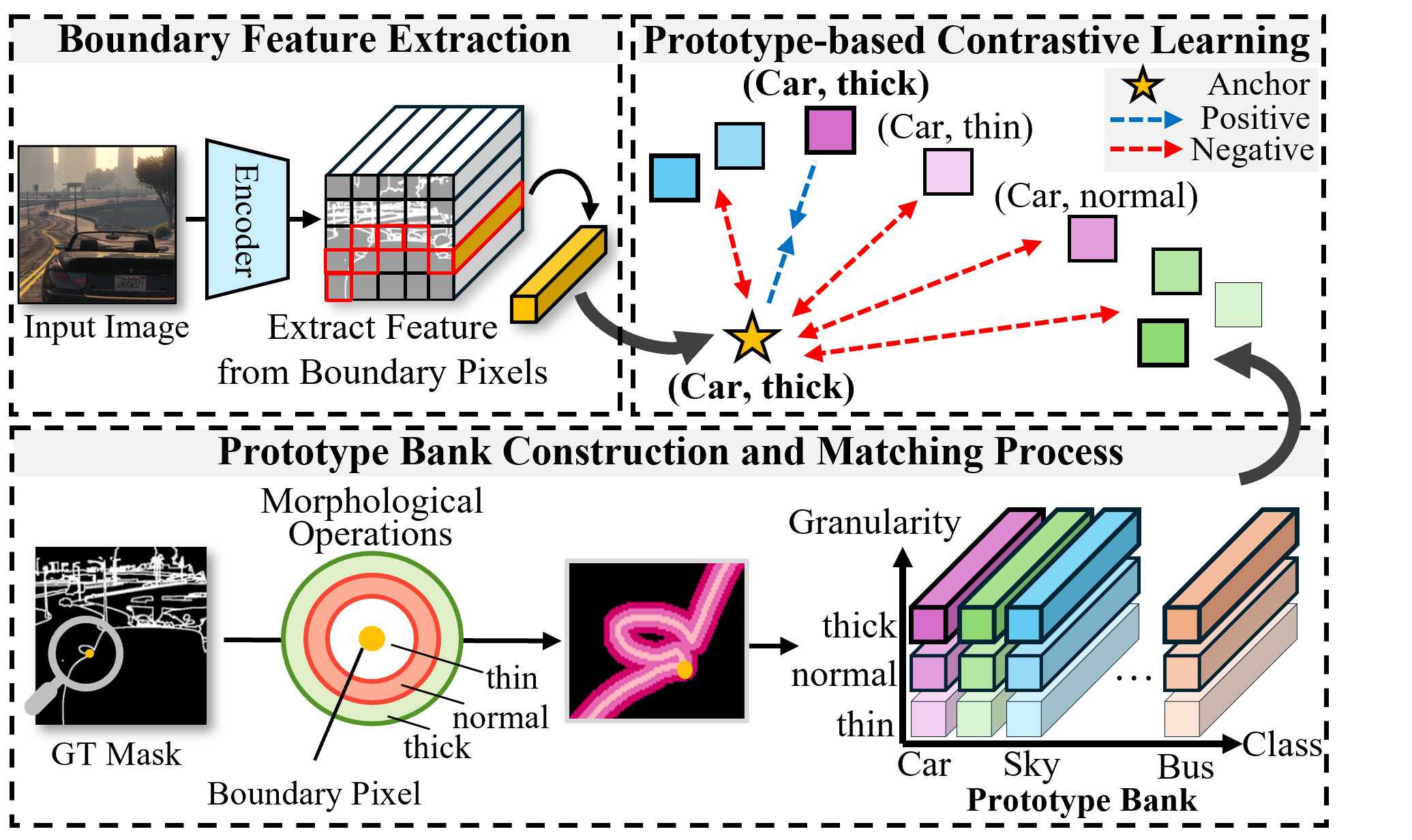
GAP learns domain-invariant boundary representations through a two-dimensional coordinate system that decomposes boundary characteristics into semantic class and geometric granularity.
- Multi-granular extraction: Generates three boundary masks (thin, medium, thick) through morphological operations to capture natural scale variations in object boundaries.
- Prototype bank: Constructs a structured memory of C × 3 × 256 prototypes, enabling systematic learning across all class-granularity combinations.
- Contrastive learning: Aligns boundary features with matching prototypes while separating from others, with imbalance-aware weighting to handle varying boundary frequencies.
2. Uncertainty Boundary Emphasis (UBE)
UBE dynamically emphasizes challenging boundary regions by leveraging prediction entropy, eliminating the need for manual hyperparameter tuning.
- Entropy-based weighting: Computes pixel-wise entropy as an uncertainty indicator—higher entropy means more ambiguous boundaries.
- Adaptive emphasis: Automatically amplifies loss for uncertain pixels while maintaining standard gradients for confident predictions.
- Domain-agnostic: Naturally adapts to varying difficulty levels across different environmental conditions without additional tuning.
3. Hardness-Aware Sampling (HAS)
HAS optimizes training efficiency by progressively focusing on challenging examples through curriculum-style learning.
- Hardness scoring: Maintains per-image difficulty scores using exponential moving average of loss values.
- Sigmoid decay scheduling: Gradually transitions from random sampling to loss-based sampling as training progresses.
- Efficient learning: Ensures stability in early stages while directing resources toward complex structures and adverse conditions later.
Results Highlights
- Improves mIoU on adverse domains by +2.52% (ACDC) and +3.93% (Dark Zurich) over DGInStyle baseline with DAFormer.
- FLEX-Seg achieves 46.56% mIoU on ACDC, 29.51% on Dark Zurich, and 48.58% Avg5 with DAFormer backbone.
- With HRDA backbone, FLEX-Seg reaches 50.07% Avg5 and 38.34% Avg2.
- Ablation shows GAP +1.52% Avg2, UBE +0.24%, and full model +3.23% over baseline.
With DAFormer Backbone
| Method | ACDC | Dark Zurich | Avg2 | Avg5 |
|---|---|---|---|---|
| DGInStyle (Baseline) | 44.04 | 25.58 | 34.81 | 46.47 |
| FLEX-Seg (Ours) | 46.56 | 29.51 | 38.04 | 48.58 |
With HRDA Backbone
| Method | ACDC | Dark Zurich | Avg2 | Avg5 |
|---|---|---|---|---|
| DGInStyle (Baseline) | 46.07 | 25.53 | 35.80 | 48.99 |
| FLEX-Seg (Ours) | 48.51 | 28.16 | 38.34 | 50.07 |
mIoU values reported in percent. All methods use MiT-B5 encoder. See the paper for full comparison tables.
Qualitative Results
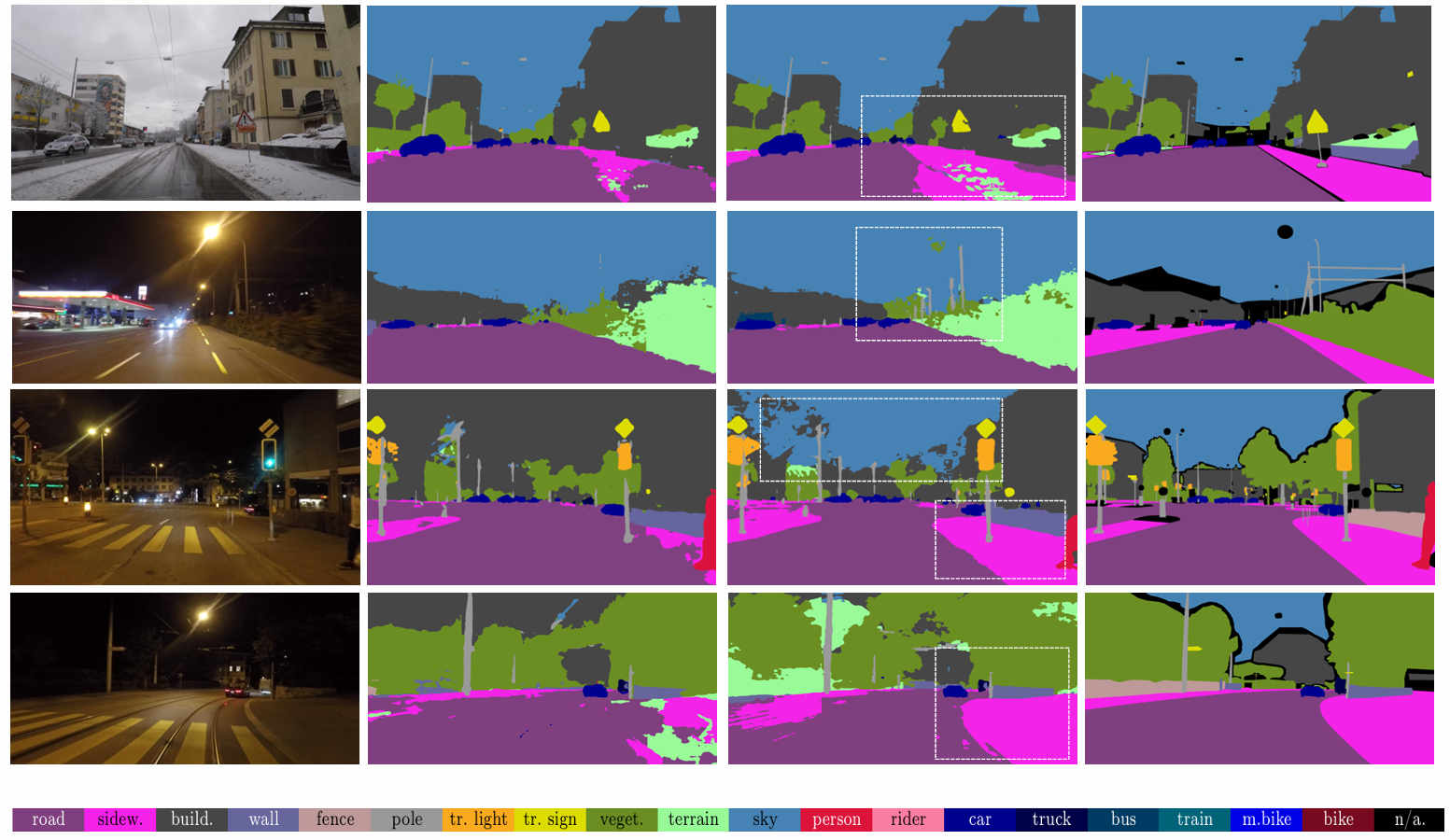
Visual comparison of segmentation results across different domains and conditions.
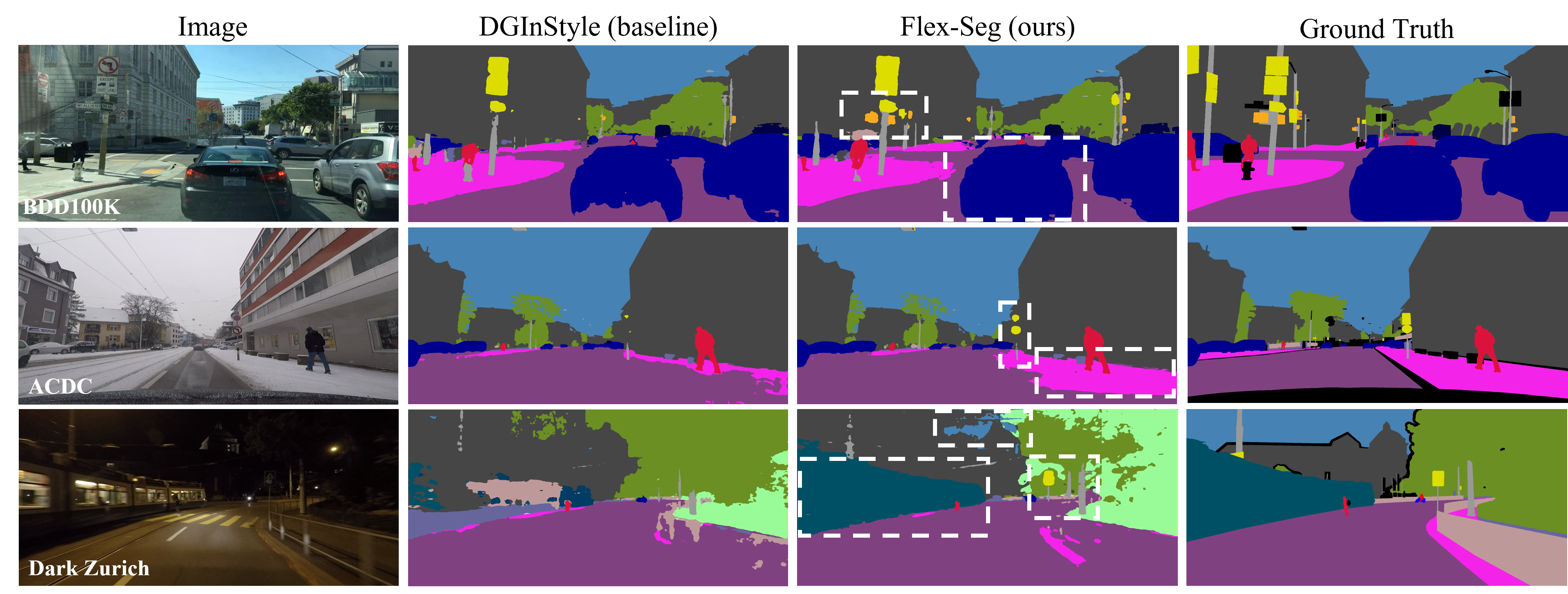
Overall comparison: FLEX-Seg produces more accurate segmentation compared to baseline methods.
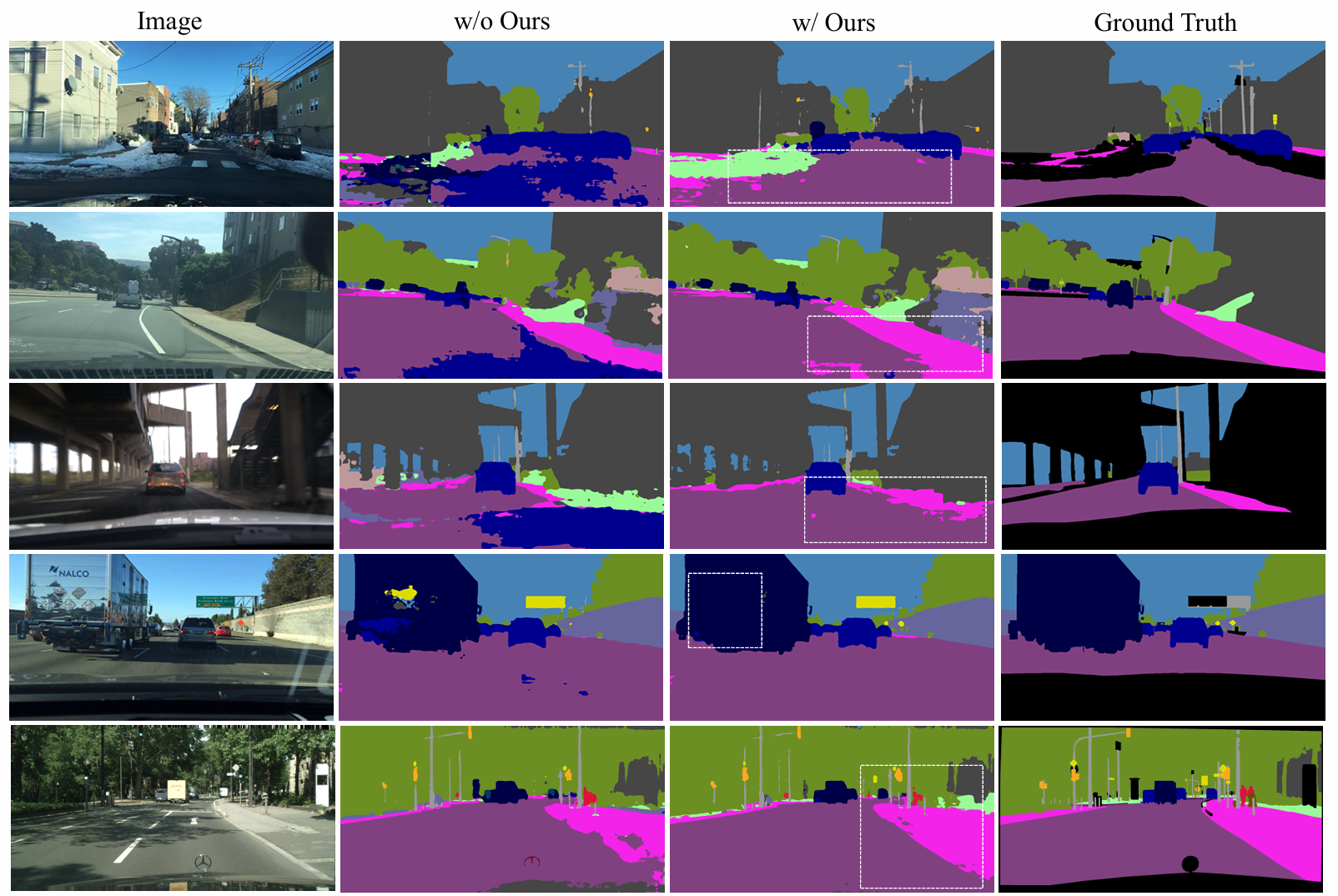
Results on standard driving scenarios (Cityscapes, BDD100K, Mapillary Vitas).
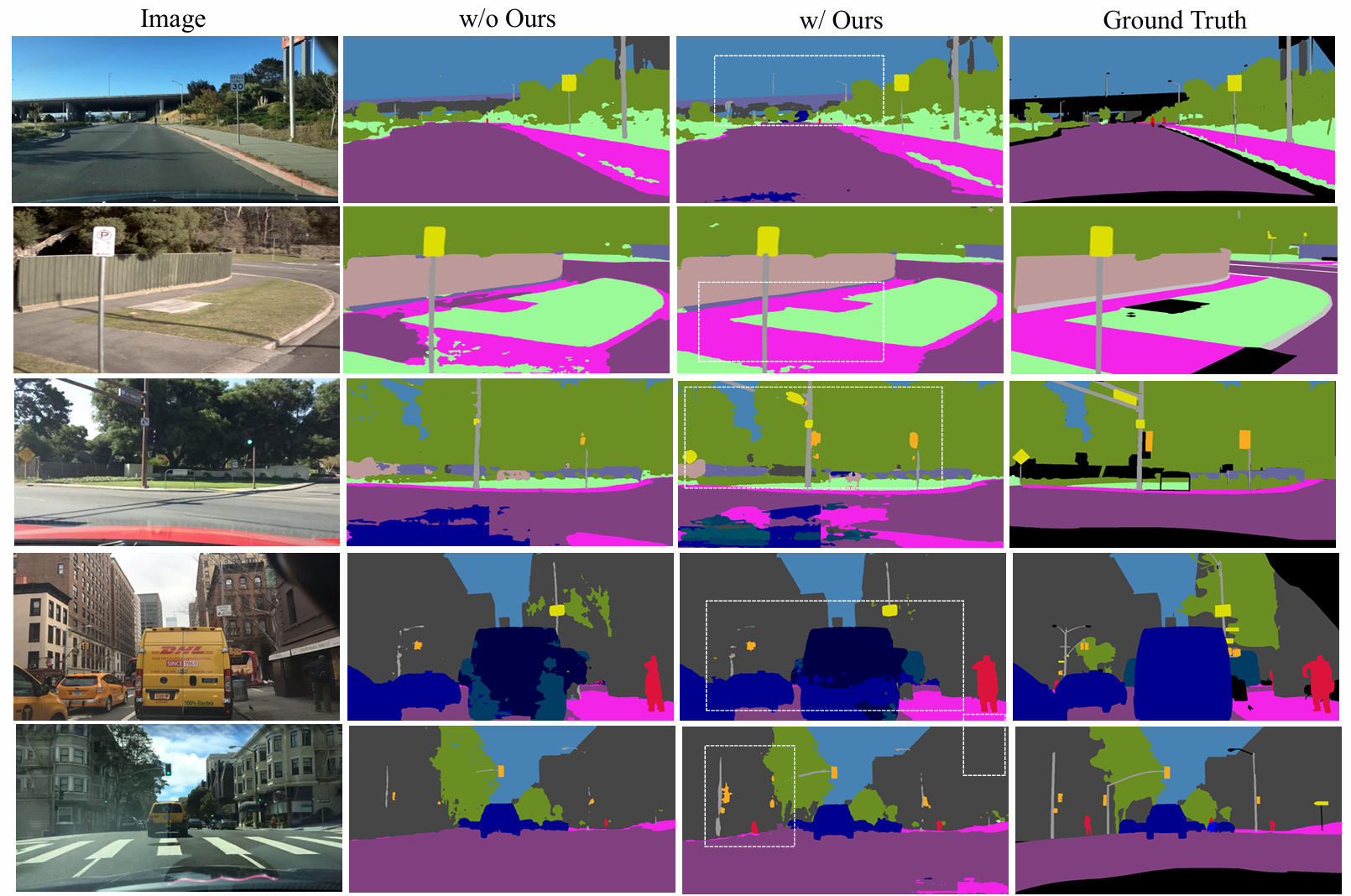
Additional results on standard driving scenarios showing improved boundary precision.
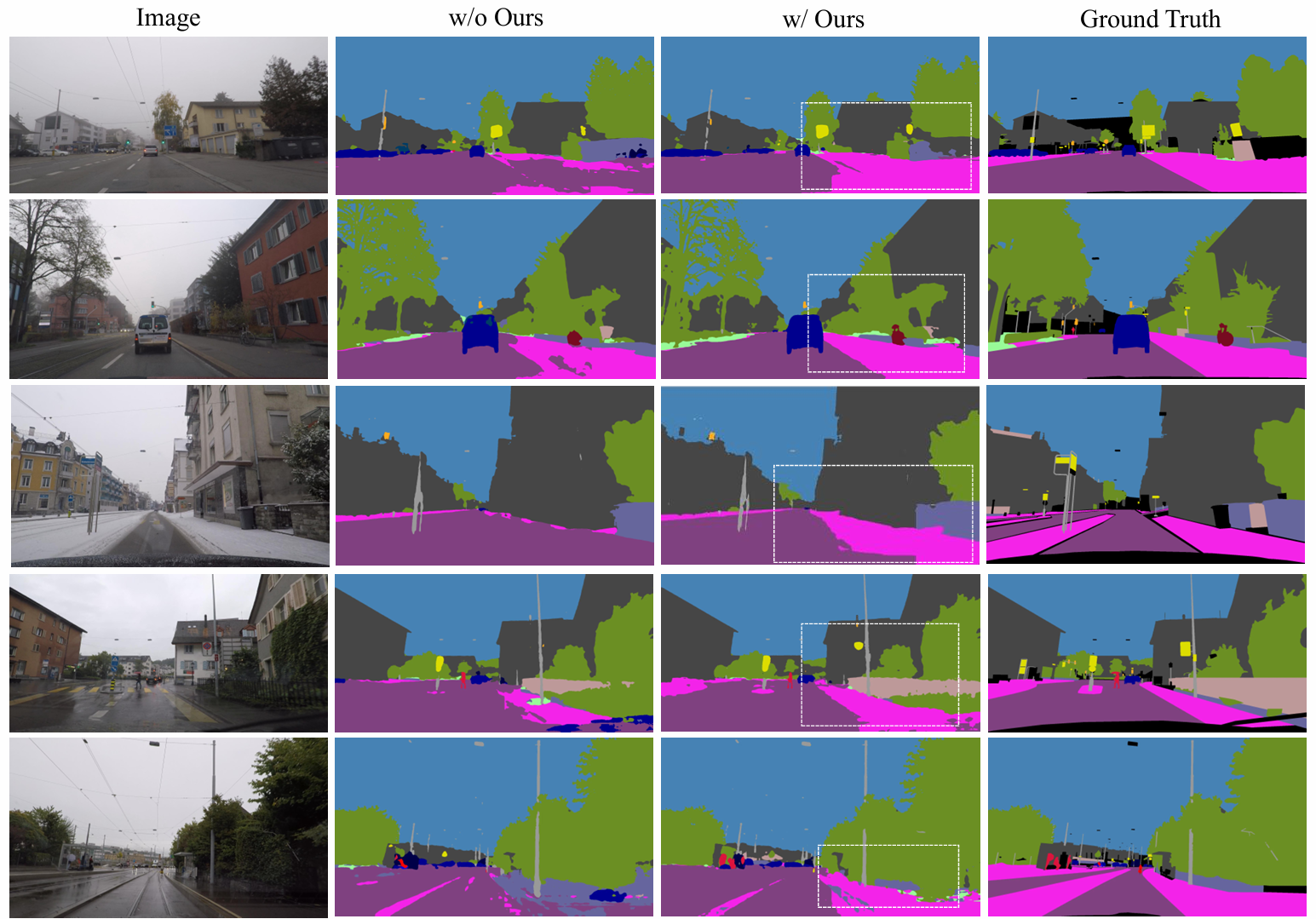
Results on ACDC: improved segmentation under fog, rain, snow, and nighttime conditions.
Additional ACDC results demonstrating robustness to various adverse weather conditions.
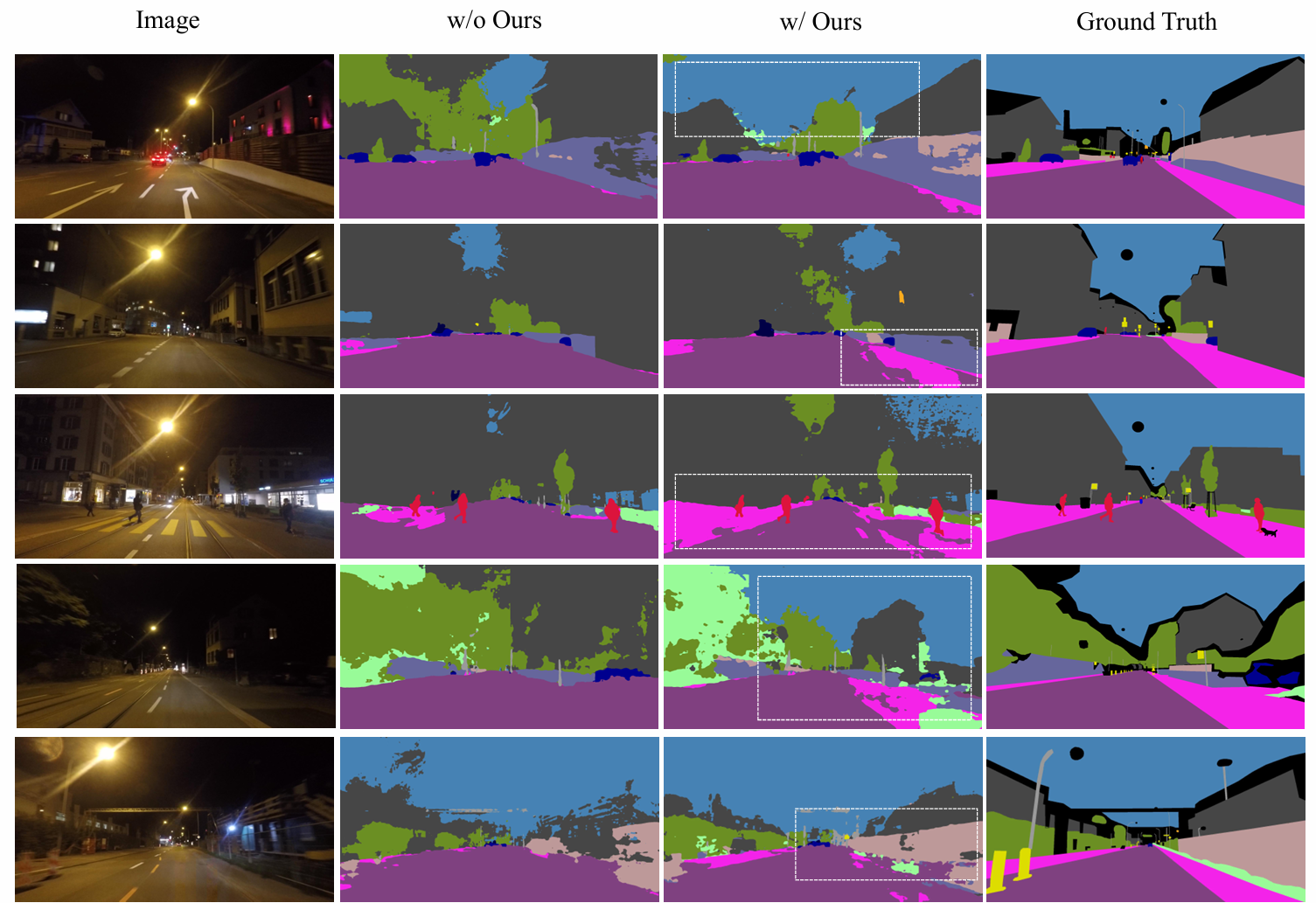
Results on Dark Zurich: accurate object delineation under challenging nighttime scenarios.
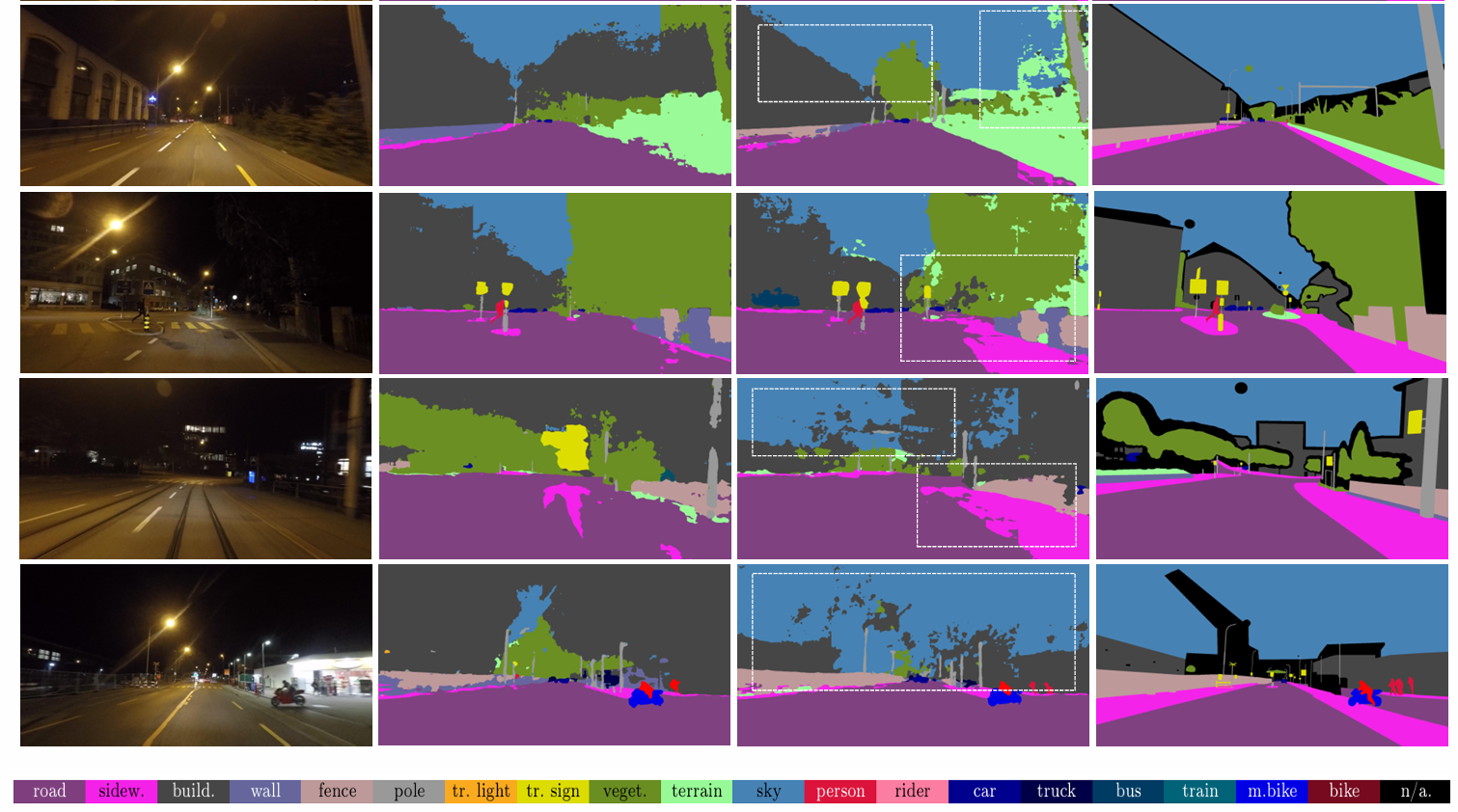
Additional Dark Zurich results showing consistent improvements in low-light conditions.
BibTeX
@article{kim2025we,
  title={Do We Need Perfect Data? Leveraging Noise for Domain Generalized Segmentation},
  author={Kim, Taeyeong and Lee, SeungJoon and Kim, Jung Uk and Cho, MyeongAh},
  journal={arXiv preprint arXiv:2511.22948},
  year={2025}
}